
Convenience and affordability have become two of the strongest drivers of health choices. This is not a passing trend; it is a reflection of modern life.
People want healthcare that fits around work, family, and daily routines. They do not want care that demands unnecessary time, travel, or complexity. However, as healthcare systems move quickly to meet this demand, a real risk is emerging: speed and scale replacing quality.
The future of consumer health will not be shaped by convenience alone. It will be defined by how well accessibility is balanced with trust, clinical rigour, and human judgement.
Technology Alone Is Not the Answer
Much of the current conversation focuses on AI as the solution. Automating triage, diagnosis, and decision-making at scale offers huge potential, but the reality is more complex.
Patients do not yet universally trust AI to make healthcare decisions in isolation. There are regulatory barriers, ethical concerns, and deeply human perceptions that cannot be ignored. Innovation does not automatically lead to adoption, and technology alone does not change behaviour.
Strengthening Trusted Healthcare Touchpoints
A more realistic and human-centred path forward is not about replacing trusted healthcare touchpoints, but strengthening them.
This is where pharmacy stands out as one of the most powerful, yet under-leveraged, channels in consumer health.
Pharmacies are already part of everyday life. They sit at the intersection of healthcare and retail, are easily accessible, and often do not require appointments. They are familiar, local, and trusted.
Through OTC medicines, prescription dispensing, and ongoing patient relationships, pharmacies influence health decisions more frequently than many traditional clinical settings.
AI as an Enabler, Not a Replacement
The real opportunity lies in embedding AI and digital platforms into these trusted environments, quietly and responsibly.
This is not AI replacing care. It is AI enabling better care.
When integrated into pharmacy workflows, technology can:
- Support structured and consistent triage
- Surface relevant clinical insights
- Reduce variation in decision-making
- Free up pharmacists to focus on professional judgement and patient communication
This allows pharmacists to do what they do best: apply expertise, explain clearly, and build trust.
Pharmacy as a Coordinator of Care
Pharmacy is uniquely positioned to manage and triage care across multiple levels.
Many conditions can be safely managed over the counter, supported by pharmacy-based clinical services. Others require prescription medicines, delivered efficiently and responsibly. Some patients need onward care, either private or NHS-funded, and pharmacies can play a key role in guiding them to the right service at the right time.
In this model, pharmacy becomes more than a point of supply. It becomes a coordinator of care.
Patients are guided, not passed around. Access is simplified, not fragmented. Convenience and affordability are delivered without compromising clinical standards.
The Power of Local Pharmacies
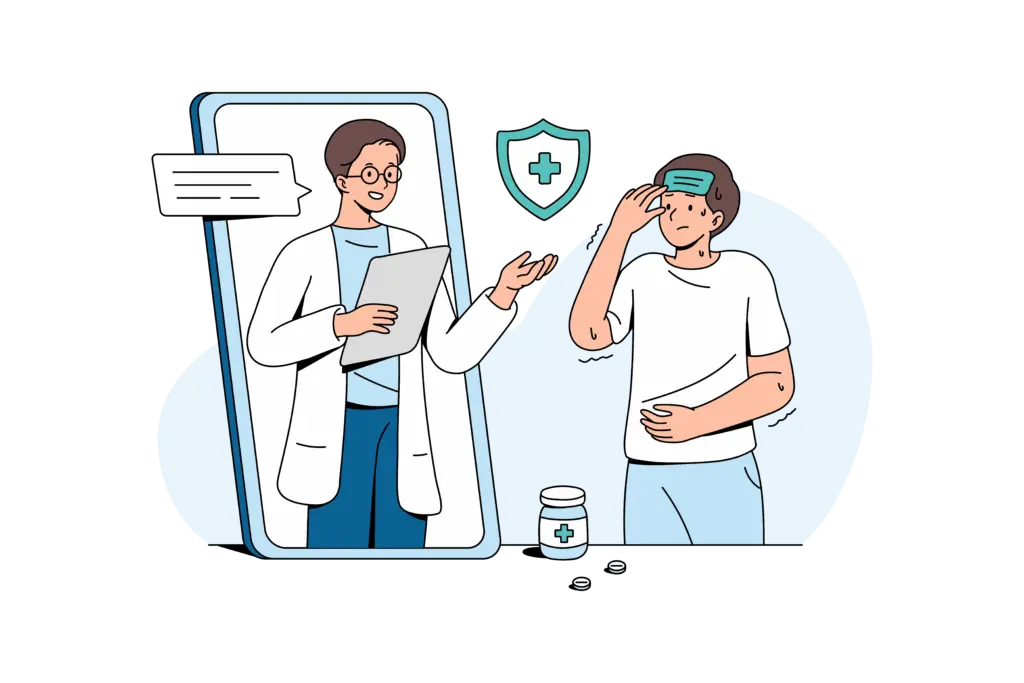
Local pharmacies sit at the heart of their communities. They understand local health needs, behaviours, and barriers in ways centralised systems often cannot.
With the right digital platforms, pharmacies can connect physical and digital services, embedding care into everyday life while maintaining accountability, safety, and quality.
What Needs to Change
This future will not happen by default.
Pharmacy teams need tools and platforms that allow them to operate at the top of their expertise. Systems must be designed for real-world use, reflecting the complexity of human health behaviour rather than idealised patient journeys.
Most importantly, technology must respect the clinical role of the pharmacist, supporting decision-making rather than reducing it to a transactional step.
Building the Future of Consumer Health
Consumer health is shifting from clinic-centric to life-centric care.
Convenience and affordability matter, but they are not enough on their own. Quality is not an optional extra; it is the foundation of trust.
Pharmacy-led healthcare offers a compelling way forward. It bridges innovation with familiarity, technology with humanity, and access with accountability.
With the right vision and infrastructure, pharmacy can become one of the defining channels of the next generation of consumer health, delivering care that is not only easier to access, but better.
This is not about predicting the future of healthcare.
It is about building it, responsibly, inclusively, and with quality at its core.